

NSE Unlisted Shares: Understanding the Investment Before the IPO
NSE unlisted shares represent equity ownership in the National Stock Exchange of India Limited before its transformation into a publicly listed company. With the NSE IPO expected in September 2026, understanding NSE unlisted shares—their characteristics, risks, and relationship to the upcoming public listing—is essential for investors tracking India's most significant capital market opportunity.
What Are NSE Unlisted Shares?

NSE unlisted shares are equity stakes in the National Stock Exchange of India Limited that currently trade outside the formal exchange system. Unlike shares listed on the NSE itself or BSE, NSE unlisted shares are transacted through authorized investment platforms, brokers, and dealers in what is commonly referred to as the grey market.
Key Characteristics:
Face Value: ₹1 per equity share
ISIN Code: INE721I01024
Depositories: NSDL and CDSL
Trading Platform: Authorized grey market dealers and investment platforms
Minimum Lot Size: Typically 10 shares
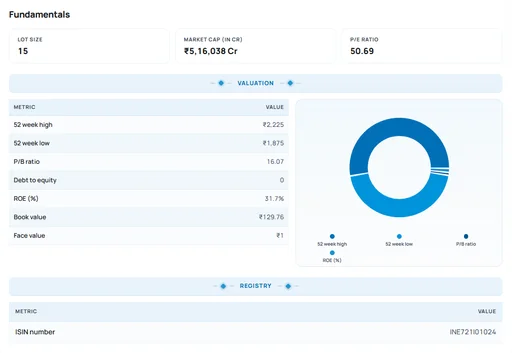
NSE has remained an unlisted entity for nearly three decades since its launch in 1994, primarily due to regulatory hurdles and the co-location controversy that delayed regulatory clearance for a public listing. The exchange's transition to a listed company marks a historic milestone for India's capital markets.
Why NSE Unlisted Shares Matter Now
The significance of NSE unlisted shares has intensified as the planned IPO draws closer. Here's why they matter to investors:
1. Pre-IPO Wealth Creation Opportunity
Investors who have held NSE unlisted shares over multiple years have witnessed substantial appreciation. The history of NSE share valuations reflects the exchange's consistent growth and the market's recognition of its value.
These earlier investors now face a critical decision: hold through the IPO transition, exit before listing, or increase positions ahead of public markets.
2. Direct Participation in India's Most Important Exchange
NSE is not a typical company. It is India's largest stock exchange and the backbone of the country's securities market. Owning NSE unlisted shares means direct equity stake in the institution that operates:
India's largest equity cash market
The world's largest equity derivatives exchange
Currency derivatives markets
Commodity derivatives platforms
Debt and government securities markets
Indices and market data services
3. Gateway to a Unique IPO Structure
The NSE IPO is structured as a pure Offer for Sale (OFS), meaning existing shareholders will sell approximately 6% of the exchange's equity. This is fundamentally different from typical IPOs where companies raise fresh capital.
Current NSE unlisted shareholders have the opportunity to participate in this historic offering.
NSE Unlisted Shares vs. NSE IPO Shares: Critical Differences
For investors evaluating NSE, understanding the distinction between unlisted and IPO shares is fundamental:
Pricing & Valuation
Unlisted Shares:
Priced through informal grey market transactions
Valuations are indicative and based on supply/demand sentiment
Limited transparency in pricing mechanisms
Subject to speculation and rumor
IPO Shares:
Price band will be determined through formal process with merchant bankers
Based on comprehensive financial analysis and institutional demand
Transparent pricing through regulatory disclosure
Market-driven through subscription process
Liquidity & Trading
Unlisted Shares:
Very limited liquidity
Difficult to find buyers or sellers
Time-consuming transactions
Higher transaction costs
Exit may take weeks or months
IPO Shares:
Listed on BSE with deep liquidity
Continuous trading during market hours
Instant execution at competitive prices
Transparent bid-ask spreads
Easy entry and exit
Regulatory Protection
Unlisted Shares:
Limited regulatory oversight
Grey market trading outside formal exchange systems
Counterparty risk in informal transactions
Fewer investor protections
IPO Shares:
Full SEBI regulatory oversight
Formal trading on recognized exchange
Clear settlement and clearing mechanisms
Investor Protection Fund coverage
Comprehensive disclosure requirements
Ownership Clarity
Unlisted Shares:
Ownership through various informal mechanisms
Documentation can be complex
Transition to listed status mechanics unclear until IPO details finalized
IPO Shares:
Clear, regulated ownership in demat form
Straightforward registration with NSDL/CDSL
Legal clarity on shareholder rights
NSE's Business Strength: Why the Exchange Matters
NSE's value proposition rests on its dominant market position and critical role in India's capital market infrastructure:
Market Dominance
NSE operates as the largest stock exchange in India and ranks among the most important globally. The exchange facilitated nearly ₹20.33 lakh crore in total fund mobilization in FY26 and ranked among the top five global exchange groups by total capital raised through IPOs at ₹1.67 lakh crores.
Investor Base Scale
The scale of NSE's investor participation is unprecedented. The exchange has built a massive retail and institutional investor base, reflecting trust in the platform and participation in India's capital market growth story.
Technology & Infrastructure
NSE operates a highly scalable and resilient technology platform that processes billions of trading messages daily. The exchange maintains strong cybersecurity infrastructure and has demonstrated operational excellence over decades.
Vertically Integrated Model
NSE's business model includes subsidiary companies that provide complementary services:
NSE Clearing Limited (NCL): Guarantees trade settlements and maintains substantial capital reserves
NSE Indices: Manages leading benchmarks and market indices
NSE Data & Analytics: Provides market data and technology solutions
NSE Academy: Investor education
NSE International Exchange (NSEIX): Global expansion through GIFT City
This integrated structure creates multiple revenue streams and reduces dependency on any single business line.
NSE's Financial Foundation
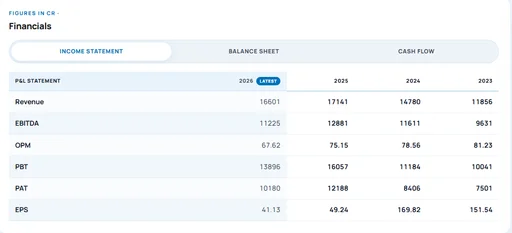
NSE reports strong and consistent financial performance, though specific quarterly details and valuations are subject to official disclosures.
The exchange has demonstrated:
Strong revenue generation across multiple business segments
High profitability with exceptional operating margins
Consistent reinvestment in technology and infrastructure
Stable financial position supporting operations
NSE's profitability reflects the structural economics of exchange operations: high fixed costs, but once scaled, exceptional operating leverage that generates dominant margins.
LIC's Strategic Stake: What It Signals
Life Insurance Corporation of India (LIC) holds a reported 10.72% stake in NSE, representing approximately 26.5 crore shares. This shareholding is significant for several reasons:
Institutional Confidence
LIC's substantial ownership demonstrates an institution's confidence in NSE's long-term value and growth prospects. LIC, as India's largest domestic institutional investor, does not make investments lightly.
Long-Term Commitment
Crucially, LIC has announced that it will not sell its NSE stake as part of the IPO. This decision to remain invested signals LIC's belief that significant value creation lies ahead for NSE beyond the public listing.
Rather than using the IPO as an exit opportunity, LIC is choosing to hold and potentially increase its position, indicating conviction in the exchange's future prospects.
Potential for Further Investment
According to available information, LIC may consider increasing its NSE holding by approximately 0.5% to 1% after the IPO, depending on factors such as:
Final IPO valuation and listing price
Post-listing market conditions
NSE's business performance
Regulatory requirements
Market availability of shares
However, this potential increase should not be interpreted as a guaranteed transaction. Any future stake increase would depend entirely on post-listing circumstances and LIC's assessment of valuations at that time.
NSE IPO Timeline: What's Expected
Based on currently available information, the NSE IPO is targeted for September 2026:
IPO Event | Expected Timing |
|---|---|
IPO Opens | Around September 21, 2026 |
IPO Closes | Around September 23, 2026 |
Allotment | Around September 24, 2026 |
Demat Credit/Refund | Around September 25, 2026 |
Expected Listing | Around September 28, 2026 |
Important Note: These dates are currently expected but have not been officially announced. Investors should verify the final schedule through NSE, SEBI, and official offer documents when available.
NSE IPO Structure: Offer for Sale
The NSE IPO is structured as a pure Offer for Sale (OFS), which differs from typical company IPOs in an important way:
In an OFS:
Existing shareholders sell their holdings
The company (NSE) does not raise fresh capital
Approximately 6% of NSE's equity will be offloaded to public market investors
The proceeds go to existing shareholders, not to NSE itself
This structure means the IPO is about creating liquidity for existing investors and enabling public participation in NSE ownership, rather than funding NSE's expansion or operations.
Key Investor Considerations Before the IPO
Investors tracking NSE unlisted shares should evaluate several critical factors:
1. Valuation at IPO
The IPO price band will be crucial for assessing whether the exchange's valuation represents value or commands a premium. A reasonable valuation provides better risk-adjusted returns than an aggressive one, even for a strong underlying business.
2. IPO Demand & Market Sentiment
The level of institutional and retail interest in the NSE IPO will influence listing dynamics. Strong demand from qualified institutional buyers (QIBs) and retail investors could indicate confidence, though it does not guarantee post-listing performance.
3. Market Conditions at Listing
The broader market environment at the time of NSE's listing will significantly impact listing performance. Economic conditions, market volatility, and investor sentiment on the listing day will drive initial trading.
4. NSE's Growth Prospects
The IPO will mark a point of transition for NSE from a private entity to a public company. Investors should consider NSE's long-term growth drivers:
Expansion of India's investor base (ongoing rapid growth)
Increasing participation in derivatives trading
Development of new asset classes and products
International expansion through NSEIX
Technology upgrades and platform enhancements
5. Regulatory Environment
NSE operates under SEBI regulation and is subject to ongoing regulatory oversight. Changes in regulations, compliance requirements, or regulatory enforcement could impact the exchange's operations and profitability.
6. Competition Considerations
While NSE dominates India's securities trading, the exchange operates in a competitive environment. BSE operates as a competing exchange, and potential regulatory changes could alter the competitive dynamics.
7. Exit from Unlisted Holdings
If you currently hold NSE unlisted shares, the IPO provides a mechanism for converting those holdings to listed shares or exiting before the transition. The exact mechanics will be specified in the final offer documents.
Risks Associated with NSE Unlisted Shares
Investors should be aware of specific risks related to unlisted share investments:
1. Valuation Volatility
Grey market prices for NSE unlisted shares can fluctuate significantly based on IPO-related news, regulatory developments, or market sentiment. Valuations can shift rapidly with limited fundamental basis.
2. IPO Price Mismatch
The final IPO price may differ materially from current unlisted share valuations. If the IPO price is significantly lower than the grey market price, investors holding unlisted shares would face paper losses.
3. Liquidity Risk
Unlisted shares have inherently limited liquidity. Exiting positions may require time, and buyers may demand price concessions. The inability to exit when desired is a meaningful risk.
4. IPO Postponement Risk
While currently expected in September 2026, the IPO could be delayed due to market conditions, regulatory issues, or unforeseen circumstances. Investors in unlisted shares would be locked into their positions during delays.
5. Regulatory Uncertainty
NSE operates under significant regulatory oversight. Unexpected regulatory changes, enforcement actions, or compliance requirements could impact the exchange's operations and shareholder value.
6. Listing Performance Uncertainty
Popular IPOs do not automatically deliver strong listing gains. IPO shares can list flat or below issue price depending on market sentiment. NSE's popularity does not guarantee listing performance.
7. Market Downturn Sensitivity
NSE's revenues and profitability are cyclical and tied to trading volumes. In bear markets or economic downturns, reduced trading activity directly impacts NSE's earnings and shareholder returns.
Understanding the Unlisted to Listed Transition
For current NSE unlisted shareholders, the IPO and listing represent a transition point:
Before the IPO
Ownership held in unlisted form
Limited trading and liquidity
Valuation through grey market pricing
Uncertain exit mechanisms
During the IPO
Subscription opportunity for new investors
Allotment process for qualified bidders
Possible transition mechanisms for existing unlisted shareholders
After Listing
Shares trade freely on BSE
Deep liquidity and transparent pricing
Public market valuation discovery
Clear shareholder rights and protections
The exact mechanics of how existing unlisted shares transition to listed status will be specified in NSE's final offer documents. Investors should carefully review these details once the DRHP (Draft Red Herring Prospectus) is filed.
Why NSE Represents a Unique Investment
NSE is not comparable to most other IPO candidates because:
1. Monopolistic Market Position
NSE operates as the dominant securities exchange in India. The regulatory barriers to entry and NSE's established infrastructure create structural advantages that protect market position.
2. Unique Business Model
As a market infrastructure institution, NSE operates differently from typical corporations. The exchange generates revenues from transaction fees, listing fees, data services, and clearing operations—creating diverse and resilient revenue streams.
3. Scale of Participation
NSE serves tens of millions of retail investors, institutional investors, and market participants. This massive user base creates network effects that strengthen NSE's competitive moat.
4. Essential Market Function
NSE plays a critical role in India's capital market ecosystem. The exchange is not discretionary—it is essential infrastructure for capital formation, wealth creation, and market functioning.
5. Growth Beneficiary
As India's household participation in capital markets accelerates and retail investor base expands, NSE benefits directly from increased trading volumes and new market participants.
FAQ: NSE Unlisted Shares
What is an NSE unlisted share?
NSE unlisted shares are equity stakes in the National Stock Exchange of India Limited that currently trade in the grey market outside formal exchange systems. They represent ownership in NSE before its planned public listing.
How do NSE unlisted shares differ from NSE IPO shares?
Unlisted shares trade with limited liquidity at informal prices; IPO shares will trade on BSE with deep liquidity at transparent prices. IPO shares offer better regulatory protection and easier exit mechanisms.
What is the face value of NSE shares?
The face value is ₹1 per equity share.
How can I buy NSE unlisted shares?
Investors can purchase NSE unlisted shares through authorized investment platforms, brokers, and dealers that facilitate pre-IPO share transactions. Registration and KYC are required.
What is LIC's stake in NSE?
LIC holds approximately 10.72% of NSE, representing about 26.5 crore shares, making it one of NSE's largest institutional shareholders.
Will LIC sell its NSE stake in the IPO?
No. LIC has announced that it will not sell any part of its NSE stake in the IPO, choosing instead to remain a long-term strategic investor.
When is the NSE IPO expected?
Based on currently available information, the NSE IPO is targeted for September 2026, with subscription expected around September 21–23 and listing around September 28. These dates have not been officially confirmed.
Is the NSE IPO structure different from typical IPOs?
Yes. The NSE IPO is structured as a pure Offer for Sale (OFS), where existing shareholders sell approximately 6% of the exchange. NSE itself will not raise fresh capital.
What are the main risks of NSE unlisted shares?
Key risks include valuation volatility, IPO price mismatch, limited liquidity, IPO postponement, regulatory uncertainty, and trading volume dependence.
Should I buy NSE unlisted shares now or wait for the IPO?
This depends on individual investment objectives, risk tolerance, and time horizon. Unlisted shares offer potential pre-IPO gains but with higher risk and liquidity constraints. IPO shares offer more certainty around valuation and liquidity. Consult with a financial advisor.
What happens to my NSE unlisted shares if the IPO is delayed?
You would remain locked into unlisted shares until the IPO proceeds. The mechanics and timing of any conversion to listed shares would depend on IPO details.
Are NSE unlisted shares suitable for all investors?
NSE unlisted shares carry specific risks and liquidity constraints that make them more suitable for investors with higher risk tolerance, longer time horizons, and comfort with illiquid investments.
Where can I verify NSE IPO details?
Official information will be available through NSE's website (https://www.nseindia.com/), SEBI's website (https://www.sebi.gov.in/), and final offer documents when the DRHP is filed.
Educational Disclaimer
This article is for educational and informational purposes only and should not be considered investment advice. NSE IPO dates, valuations, price bands, and issue details may change. All information is subject to official confirmation through NSE, SEBI, and final offer documents.
Investment in NSE unlisted shares or IPO subscriptions carries significant risks. Past performance or market expectations do not guarantee future results. Unlisted share prices are indicative and subject to substantial fluctuation. IPO prices may differ materially from current unlisted valuations. Investors must conduct thorough due diligence, understand all risks, and consult qualified financial advisors before making any investment decisions.
Final Takeaway
NSE unlisted shares represent an opportunity to participate in India's most critical market infrastructure institution ahead of a historic public listing. The exchange's dominant market position, strong business fundamentals, and role in India's capital market growth story provide a compelling investment thesis.
However, the transition from unlisted to listed status carries execution risks, valuation uncertainty, and market-dependent factors that investors must carefully evaluate. Current unlisted shareholders face important decisions about their holdings as the September 2026 IPO approaches.
For new investors, the IPO will provide a more transparent and regulated mechanism to participate in NSE ownership, with better liquidity and clearer valuation discovery.
"https://www.dhankirti.co.in/shares" NSE unlisted shares and other pre-IPO investment opportunities on Dhankirti Wealth. Evaluate all available information, financial data, and risks carefully before making any investment decision.