
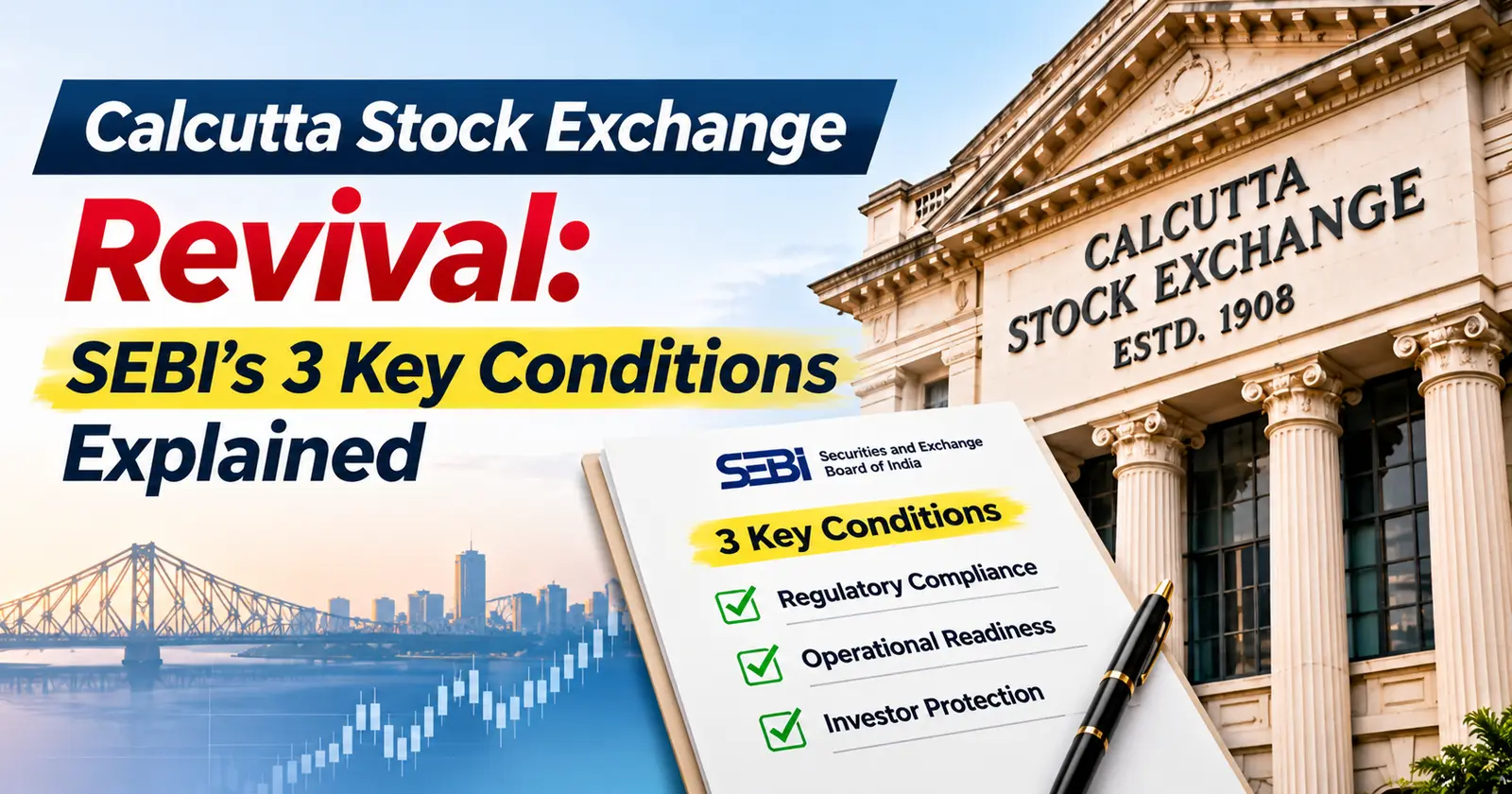
Can India's century-old Calcutta Stock Exchange make a comeback? SEBI has outlined strict financial, technological and regulatory requirements that the exchange must meet before resuming trading.
India's capital market could see an interesting development as efforts to revive the Calcutta Stock Exchange (CSE) gain attention. However, its return to the trading landscape will depend on meeting the Securities and Exchange Board of India's (SEBI) regulatory requirements.
According to a recent report by The Indian Express, SEBI Chairman Tuhin Kanta Pandey highlighted that the exchange must demonstrate financial strength, attract sufficient trading volumes and invest in modern technology before it can resume operations.
SEBI's Three Key Conditions for CSE Revival
SEBI has highlighted three major requirements that will determine the exchange's revival:
1. Financial Strength
The exchange must maintain a minimum net worth of ₹100 crore and achieve an average annual turnover of ₹1,000 crore to operate as a recognised stock exchange.
2. Technology and Trading Infrastructure
CSE must establish a modern online trading platform, effective market surveillance systems, cybersecurity controls and a cyber-resilient infrastructure to ensure secure and transparent trading.
3. Sustainable Business Model
The exchange must demonstrate its ability to attract sufficient trading activity, build a nationwide network of trading members and establish a commercially viable business model.
It must also clear outstanding dues to brokers and stakeholders and establish a separate clearing corporation or partner with an existing one.
Why Did Calcutta Stock Exchange Stop Trading?
Established in 1908, the Calcutta Stock Exchange was once an important part of India's financial market ecosystem.
However, trading on its platform has remained suspended since 2013–14 due to regulatory and operational challenges. During that period, its annual turnover had fallen to approximately ₹90 crore, significantly below the required threshold.
Now, renewed efforts to revive the exchange have brought its future back into focus. However, meeting SEBI's requirements remains essential before any trading comeback can take place.
What Could CSE's Revival Mean for India's Capital Markets?
A potential revival could bring renewed attention to regional financial markets and Kolkata's role in India's financial ecosystem.
However, attracting investors, ensuring liquidity and competing with established exchanges such as NSE and BSE will remain important challenges.
The development also highlights how modern stock exchanges increasingly depend on technology, cybersecurity, strong governance and efficient trading infrastructure.
What Lies Ahead?
SEBI has made it clear that CSE must fulfil the prescribed regulatory requirements before its revival proposal can be considered.
For now, the exchange's return to active trading remains conditional rather than confirmed. Its ability to meet financial benchmarks, settle outstanding obligations and establish a sustainable technology-driven platform will determine the next steps.
Frequently Asked Questions (FAQs)
1. What is the Calcutta Stock Exchange (CSE)?
The Calcutta Stock Exchange is one of India's oldest stock exchanges, established in 1908. It is based in Kolkata and historically played an important role in India's securities market.
2. Why was trading suspended at CSE?
Trading on the exchange has remained suspended since 2013–14 following regulatory and operational challenges, including insufficient trading turnover.
3. What are SEBI's requirements for CSE revival?
CSE must meet a minimum net worth of ₹100 crore, achieve an average annual turnover of ₹1,000 crore, establish modern trading and surveillance infrastructure, meet cybersecurity requirements and clear outstanding stakeholder dues.
4. Has SEBI approved the revival of Calcutta Stock Exchange?
No. SEBI has outlined the requirements that must be fulfilled before the exchange can resume operations. Its revival has not been approved.
5. How could CSE's revival impact India's stock market?
A successful revival could provide another trading platform and potentially strengthen regional financial market participation. However, liquidity, investor participation and competition with established exchanges will be key challenges.
Final Takeaway
The proposed revival of the Calcutta Stock Exchange is more than a comeback story; it highlights the changing requirements of India's financial markets.
While CSE has a long history, its future will depend on financial strength, technological readiness and the ability to attract meaningful trading activity.
Explore more financial updates and market insights at Dhankirti Wealth and discover opportunities in the Unlisted Shares market.
Disclaimer: This article is for informational and educational purposes only and does not constitute investment advice. Readers should refer to official SEBI announcements and regulatory disclosures for the latest developments.